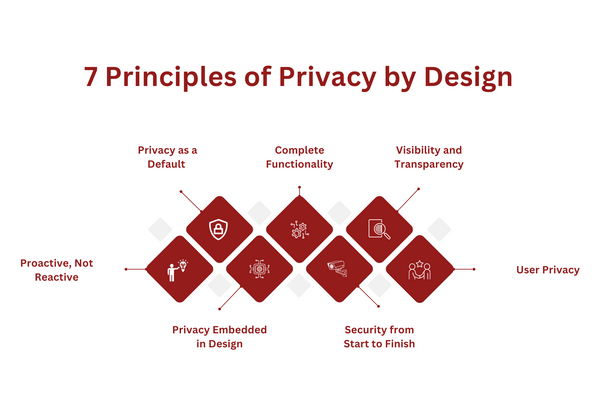
Prioritizing data protection through proactive legal structures. Essential for building consumer confidence and regulatory adherence.
My experience in regulatory compliance and data protection has consistently shown that a reactive approach to privacy is a recipe for disaster. Waiting for a breach or a regulatory fine to act is not merely costly; it erodes trust, a company’s most valuable asset. The shift towards embedding privacy from the outset, championed by Privacy-by-Design Legal Frameworks, is no longer optional. It’s a foundational requirement for any entity handling personal data, dictating how we build systems, develop products, and interact with our customers.
Overview
- Privacy-by-Design Legal Frameworks are crucial for proactive data protection and compliance.
- They move organizations beyond reactive compliance, fostering trust and reducing regulatory risk.
- Trust is a cornerstone of modern data governance, directly impacting customer loyalty and brand reputation.
- Practical implementation involves integrating privacy principles into product development lifecycles and business processes.
- Key principles include data minimization, purpose limitation, and robust security measures.
- These frameworks are applicable across various industries, from healthcare to technology, necessitating tailored approaches.
- Adopting these frameworks ensures adherence to regulations like GDPR and CCPA, both within the US and globally.
Adopting Privacy-by-Design Legal Frameworks for Proactive Compliance
From my vantage point, the primary driver for adopting Privacy-by-Design Legal Frameworks is simple: foresight. Businesses can no longer afford to treat privacy as an afterthought, bolted on at the final stages of a project. This proactive stance means integrating privacy considerations into every stage of development, from initial concept to deployment and beyond. It’s about building a robust data ecosystem where protection is inherent, not just an add-on.
Regulations like the GDPR in Europe and the CCPA in the US have significantly reinforced this need. They demand accountability and demonstrate a commitment to data protection. Organizations are expected to show how they’ve built privacy into their systems. This means having clear documentation, conducting privacy impact assessments, and implementing measures that minimize data collection, pseudonymize data where possible, and ensure data retention policies are strictly followed. It’s a move from merely “checking the box” to genuinely embedding privacy into organizational DNA.
The Role of Trust in Modern Data Governance
Trust is the bedrock of any sustainable business relationship, especially in the digital age. When customers share their personal data, they are entrusting an organization with something valuable and sensitive. A breach of that trust, whether through misuse of data, inadequate security, or a lack of transparency, can have devastating long-term consequences. This extends beyond individual customer relationships to market perception and brand equity.
Building trust through strong data governance involves being transparent about data practices, offering individuals control over their information, and consistently demonstrating a commitment to ethical data handling. Companies that prioritize privacy often see increased customer loyalty and a stronger competitive advantage. It’s about demonstrating that protecting personal information is a core organizational value, not just a regulatory obligation. This approach differentiates market leaders and fosters a more resilient relationship with their user base.
Implementing Privacy-by-Design Legal Frameworks in Practice
Operationalizing Privacy-by-Design Legal Frameworks involves concrete, repeatable actions embedded in business processes. This begins with early engagement of privacy legal and technical experts during product design. Data mapping, for instance, becomes a foundational step to understand exactly what data is collected, why, and how it flows through systems. My experience shows that this clarity helps identify privacy risks early, allowing for mitigation before issues become ingrained.
Key practical steps include:
- Data Minimization: Collecting only the data strictly necessary for a specified purpose.
- Purpose Limitation: Using collected data only for the explicit purposes disclosed at the time of collection.
- Built-in Security: Integrating robust security measures from the outset, protecting data throughout its lifecycle.
- Transparency: Providing clear, easily understandable privacy notices to data subjects.
- User Control: Giving individuals mechanisms to access, correct, or delete their personal data.
- Privacy by Default: Ensuring that the highest privacy settings are the default for any new product or service.
These measures are woven into software development lifecycles, procurement processes, and even marketing strategies.
Operationalizing Privacy-by-Design Legal Frameworks Across Industries
The principles of Privacy-by-Design Legal Frameworks are universally applicable but require specific tailoring for different sectors. In healthcare, stringent regulations like HIPAA in the US mandate robust patient data protection, focusing on de-identification and restricted access. Financial services, dealing with sensitive monetary information, emphasize fraud prevention and secure transaction processing alongside privacy. Technology companies, often at the forefront of data collection, must balance innovation with user privacy, integrating these frameworks into AI development and cloud services.
My work has shown that regardless of industry, the core challenge remains consistent: translating legal requirements into actionable engineering and business practices. This often involves cross-functional teams, regular training, and continuous auditing to ensure ongoing compliance. The goal is to create a sustainable privacy program that adapts to evolving technologies and regulatory landscapes, protecting both the organization and its data subjects. It’s about making privacy a strategic asset, not just a cost center.